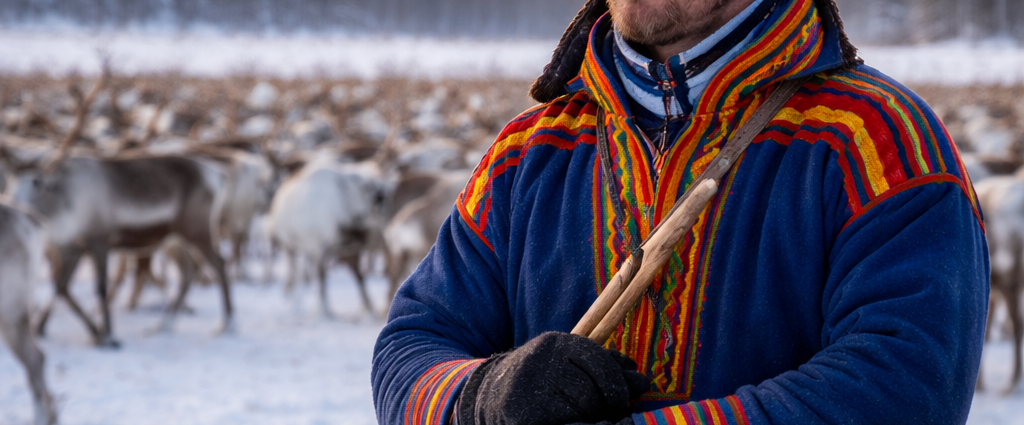
The Sámi are the Indigenous people of northern Europe, inhabiting the region known as Sápmi, which spans northern Sweden, Norway, Finland and Russia’s Kola Peninsula. In Sweden, the Sámi are recognized both as an Indigenous people and as a national minority — a status that grants cultural and linguistic rights. Yet recognition alone has not resolved the complex questions surrounding land, governance and economic development that continue to define Sámi–state relations.
Historical Background
For centuries, Sámi communities maintained livelihoods based on reindeer herding, fishing and small-scale agriculture, shaped by seasonal migration patterns across vast northern territories. However, from the late 19th century onward, Swedish state policies increasingly sought to regulate and assimilate Sámi life.
Boarding schools separated Sámi children from their families. Racial biology research conducted in the early 20th century subjected Sámi individuals to pseudoscientific examinations. Land reforms and industrial expansion gradually restricted traditional grazing areas. These policies reflected broader European trends of modernization that often marginalized Indigenous communities.
In recent decades, Sweden has publicly acknowledged these historical injustices. Yet their long-term social and economic consequences remain part of the contemporary landscape.
Legal Recognition and the Sámi Parliament
In 1977, Sweden formally recognized the Sámi as an Indigenous people. In 1993, the Sámi Parliament (Sametinget) was established. The parliament functions both as an elected body and as a government agency responsible for promoting Sámi culture, language and reindeer husbandry.
However, the Sámi Parliament does not hold full legislative authority over land or resource management. While it represents Sámi interests, ultimate decision-making power in many areas remains with the national government and regional authorities. Critics argue that this limits meaningful self-determination.
Land Rights and Economic Development
Land remains the central issue in Sámi–state relations. Reindeer herding requires access to extensive grazing territories across northern Sweden. At the same time, these areas are rich in natural resources and have become sites of:
- Mining exploration
- Forestry operations
- Wind power development
- Infrastructure expansion
Conflicts arise when industrial projects overlap with traditional grazing lands. Sámi villages often argue that such developments disrupt migration routes, fragment ecosystems and threaten cultural survival.
A significant legal milestone came with the 2020 Supreme Court ruling in the Girjas case, which strengthened a Sámi village’s rights to control hunting and fishing within its traditional territory. The ruling was widely viewed as a step toward clarifying Indigenous land rights, though broader structural questions remain unresolved.
Language and Cultural Preservation
Language is central to Sámi identity. Several Sámi languages are spoken in Sweden, yet many are classified as endangered. While minority language protections exist, fluency levels vary, particularly among younger generations.
Cultural revitalization efforts include:
- Sámi-language education programs
- Cultural institutions and museums
- Artistic expression in music, literature and film
- International Indigenous cooperation
The traditional vocal style known as joik has gained renewed visibility, blending ancestral forms with contemporary performance. Sámi designers, filmmakers and writers increasingly contribute to Sweden’s national cultural conversation.
Political and Social Debate
Sweden often positions itself as a global advocate for human rights and sustainability. Within this framework, the treatment of the Sámi is viewed as a measure of how Indigenous rights are implemented domestically.
Debates frequently center on the concept of consultation versus consent. Sámi representatives argue that meaningful participation in land decisions must go beyond formal hearings and ensure genuine influence. Government authorities and industry groups emphasize economic growth, energy transition and national interests.
Balancing environmental sustainability, economic development and Indigenous rights remains one of the most complex policy challenges in northern Sweden.
A Contemporary Assessment
Today, the Sámi in Sweden experience both institutional recognition and ongoing structural challenges. Their culture is visible and protected under law, yet land disputes and questions of political authority continue to shape everyday realities.
The broader issue is not simply whether the Sámi are recognized — it is how that recognition translates into practice. As Sweden navigates climate transition, resource demand and regional development, Indigenous rights remain central to the national conversation.
Understanding the Sámi experience requires acknowledging history, examining current policy and recognizing that Indigenous identity in Sweden is not confined to tradition alone. It is an evolving, modern reality that intersects with law, economics and environmental stewardship.
In that sense, the story of the Sámi is not only about the past. It is about the future direction of Sweden itself.