
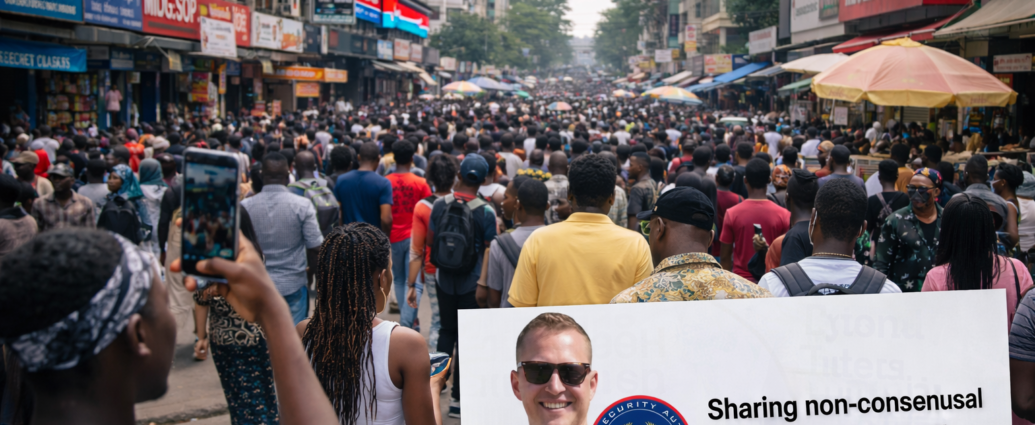
A Russian man identified online as Vyacheslav Trahov, also known as “Yaytseslav,” has become the center of international controversy after posting videos of his encounters with women in Ghana and Kenya, triggering widespread outrage and calls for investigation.
The videos, which circulated widely on TikTok, Telegram and other social platforms, show the man approaching women in public spaces such as malls, streets and supermarkets. In many cases, he initiates conversations, compliments the women and invites them to accompany him to his apartment.
Critics allege that some of these encounters were secretly recorded using wearable technology, such as smart glasses capable of capturing video discreetly. Observers have raised concerns that some of the women may not have been fully aware they were being filmed or that the footage would be shared publicly.
The controversy has drawn strong reactions in both Ghana and Kenya. Ghana’s Ministry of Gender, Children and Social Protection issued a statement warning that recording and distributing intimate images without consent constitutes a serious violation of privacy and human dignity and may be subject to criminal investigation.
Public reaction across Africa has been mixed but intense. Many social media users condemned the man’s actions as exploitative and disrespectful, while others called for law enforcement to intervene. Some activists and public figures in Kenya urged authorities to investigate the incident, emphasizing the importance of protecting personal privacy and digital rights.
The man reportedly traveled between several African countries, including Ghana and Kenya, filming encounters and distributing edited clips online while reserving longer recordings for paying subscribers.
In messages shared on his private channels, he allegedly encouraged other foreigners to visit Africa, claiming they would receive attention and interest from local women. These remarks further fueled criticism, with many accusing him of promoting harmful stereotypes and exploiting social and economic inequalities.
The controversy has sparked broader debate about influencer culture, digital ethics and the responsibility of content creators operating across international borders. Legal experts note that Kenyan and Ghanaian laws prohibit recording individuals without consent, especially when the footage involves private or sensitive interactions.
For many observers, the incident highlights growing tensions between global social media culture and local legal and ethical standards. As authorities assess the situation, the case has become a flashpoint in discussions about consent, exploitation and the impact of digital platforms on personal privacy.