
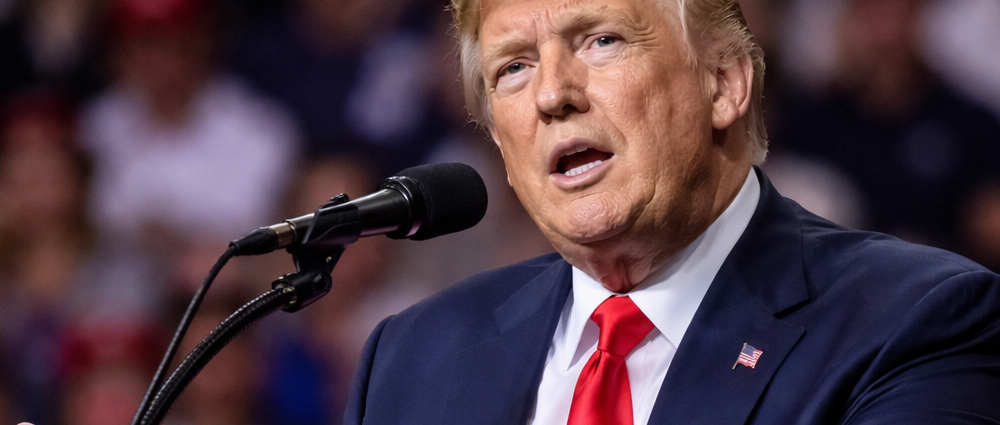
Former U.S. President Donald Trump has again signaled a willingness to revisit key pillars of American foreign and economic policy, including trade agreements and military alliances, as he campaigns for a potential return to the White House. His statements have drawn attention across Europe, where policymakers are closely watching the trajectory of U.S. politics.
In recent remarks, Trump reiterated his long-standing criticism of trade arrangements he views as unfavorable to American workers. During his presidency from 2017 to 2021, the United States imposed tariffs on steel and aluminum imports from the European Union and other partners, citing national security concerns. Those measures led to retaliatory tariffs and strained transatlantic economic relations.
While some tariffs were later eased under the Biden administration, the broader debate over industrial policy, supply chains and economic sovereignty continues. Analysts note that a renewed focus on protectionist policies could affect export-driven economies in Europe, including Sweden, where industries such as steel, manufacturing and technology rely heavily on global trade networks.
Trump has also repeated concerns about NATO burden-sharing, arguing that European allies should contribute more to collective defense spending. Although Sweden is not a longstanding NATO member, its recent accession to the alliance underscores the heightened strategic sensitivity of U.S.–European relations.
Observers suggest that a potential second Trump administration could adopt a more transactional approach to foreign policy. Supporters argue such a strategy prioritizes national interest and economic leverage, while critics warn it may increase uncertainty in global markets and alliances.
For European governments, the key issue is not only the outcome of U.S. elections but the broader direction of American policy. As geopolitical tensions persist in Eastern Europe and the Middle East, and as economic competition intensifies globally, stability in transatlantic relations remains central to international security and trade.
Swedish officials, like many across the European Union, are preparing for multiple scenarios. Whether U.S. policy shifts dramatically or maintains continuity, the implications will extend well beyond Washington.
As the campaign cycle continues, Trump’s statements offer an early indication of how debates over trade, defense and global leadership may shape international relations in the coming years.